

Is Your Cat Drinking Enough Water? Here's What You Need to Know
Water is essential for your cat's health, yet many cats don't drink enough—leading to serious health issues like kidney disease, urinary tract infections, and bladder stones. As a cat parent, understanding your cat's hydration needs and encouraging proper water intake can add years to their life.
In this comprehensive guide, we'll explore how much water cats should drink daily, signs of dehydration, why cats often don't drink enough, and proven strategies to increase your cat's water consumption.
How Much Water Should a Cat Drink Per Day?
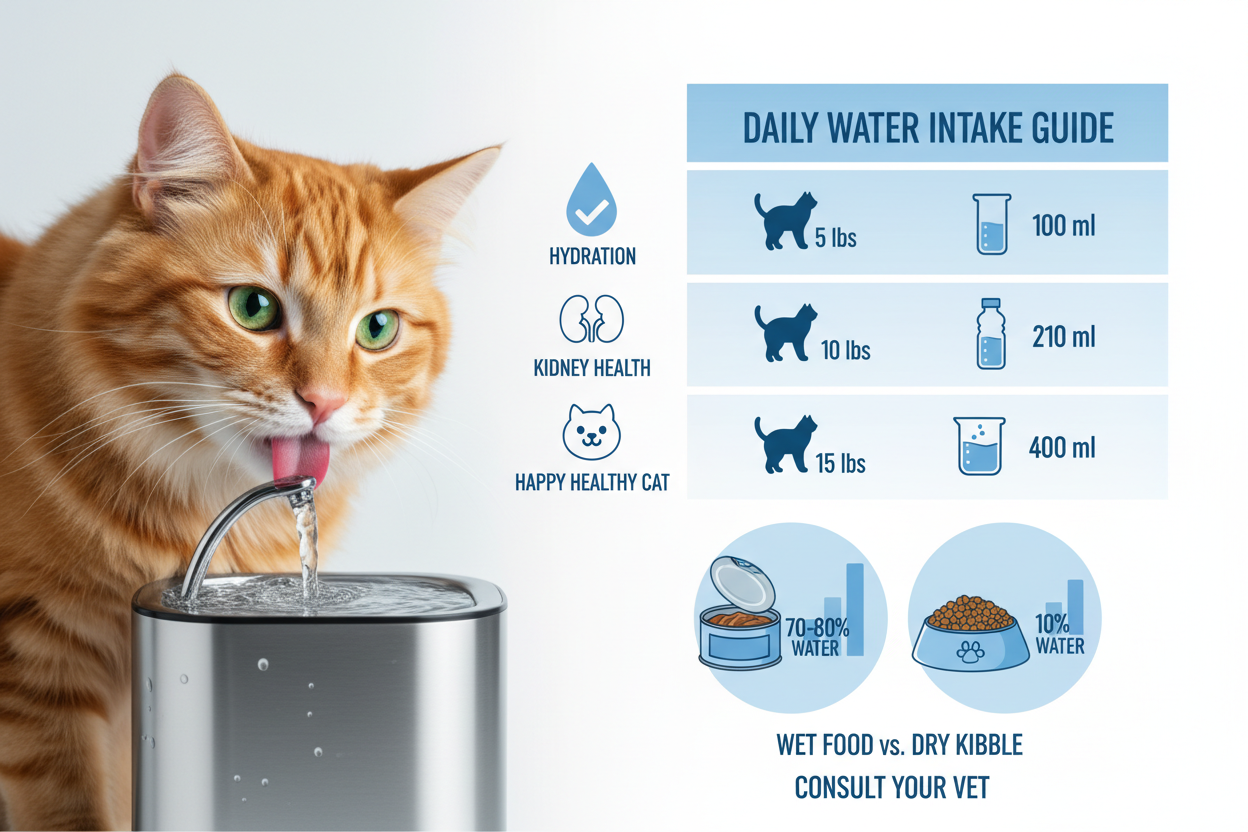
The general rule of thumb is that cats should drink approximately 3.5 to 4.5 ounces (about 100-130 ml) of water per 5 pounds (2.3 kg) of body weight per day.
Quick Reference Chart:
| Cat Weight | Daily Water Intake |
|---|---|
| 5 lbs (2.3 kg) | 3.5-4.5 oz (100-130 ml) |
| 8 lbs (3.6 kg) | 5.5-7 oz (160-210 ml) |
| 10 lbs (4.5 kg) | 7-9 oz (210-270 ml) |
| 12 lbs (5.4 kg) | 8.5-11 oz (250-325 ml) |
| 15 lbs (6.8 kg) | 10.5-13.5 oz (310-400 ml) |
Important note: This includes water from all sources—drinking water, wet food, and any moisture in treats. Cats eating primarily wet food (which is about 70-80% water) will drink less from their water bowl than cats on dry kibble diets.
Factors That Affect Your Cat's Water Needs
1. Diet Type
Dry Food (Kibble): Contains only 6-10% moisture, so cats on dry food diets need to drink significantly more water to compensate.
Wet Food (Canned): Contains 70-80% moisture, providing substantial hydration through food. Cats on wet food diets naturally drink less from their water bowl.
Mixed Diet: Water needs fall somewhere in between, depending on the ratio of wet to dry food.
2. Activity Level
Active, playful cats burn more energy and lose more water through respiration and activity, requiring increased hydration compared to sedentary cats.
3. Environmental Temperature
Hot weather, heated homes in winter, or living in warm climates increases water loss through panting and evaporation, raising your cat's hydration needs.
4. Health Conditions
Certain medical conditions significantly affect water consumption:
- Kidney disease: Cats drink more to compensate for reduced kidney function
- Diabetes: Causes excessive thirst and urination
- Hyperthyroidism: Increases metabolism and water needs
- Urinary tract issues: May require increased water intake for treatment
5. Age
Kittens and senior cats have different hydration needs. Senior cats are particularly prone to dehydration and kidney issues, making adequate water intake critical.
Why Don't Cats Drink Enough Water?
Cats evolved from desert-dwelling ancestors who obtained most of their moisture from prey. This evolutionary background means domestic cats have a naturally low thirst drive compared to other animals. Common reasons cats don't drink enough include:
1. Low Natural Thirst Drive
Unlike dogs, cats don't instinctively drink large amounts of water. They're designed to get hydration from food, which is why wet food diets are often recommended.
2. Stale or Unappealing Water
Cats are extremely sensitive to water freshness. Stagnant water in bowls quickly develops odors and tastes that deter drinking. Cats instinctively prefer moving water, which in nature signals freshness and safety.
3. Bowl Location and Type
Cats may avoid water bowls that are:
- Too close to their food or litter box
- Made of plastic (which can impart taste and harbor bacteria)
- Too small or deep (causing whisker discomfort)
- In high-traffic or noisy areas
4. Dirty Water Bowls
Bacteria, dust, and debris accumulate quickly in water bowls. Cats with sensitive noses may refuse to drink from bowls that aren't impeccably clean.
Signs Your Cat May Be Dehydrated
Recognizing dehydration early is crucial. Watch for these warning signs:
Physical Signs:
- Skin tent test: Gently pinch the skin at the back of the neck. If it doesn't snap back immediately, your cat may be dehydrated
- Dry, sticky gums: Healthy gums should be moist and slippery
- Sunken eyes: Eyes appear dull or recessed
- Lethargy: Unusual tiredness or weakness
- Loss of appetite: Refusing food or eating less than normal
Behavioral Signs:
- Decreased urination or very dark, concentrated urine
- Constipation or hard, dry stools
- Panting (unusual in cats unless stressed or overheated)
- Increased heart rate
If you suspect dehydration, contact your veterinarian immediately. Severe dehydration is a medical emergency requiring professional treatment.
How to Encourage Your Cat to Drink More Water
Increasing your cat's water intake doesn't have to be difficult. Try these veterinarian-recommended strategies:
1. Invest in a Cat Water Fountain (Most Effective)
This is the #1 most effective method to increase cat hydration. Studies show that cats drink up to 50% more water when offered a fountain versus a static bowl. Here's why fountains work:
- Moving water attracts cats: The sound and movement trigger natural drinking instincts
- Stays fresher longer: Circulation and filtration keep water clean and oxygenated
- Appeals to natural preferences: Cats instinctively trust flowing water as safer than stagnant water
- Multiple drinking positions: Cats can drink from the stream, bowl, or bubbling top
For optimal results, choose a stainless steel cat water fountain. Stainless steel is superior to plastic because it:
- Doesn't harbor bacteria or develop biofilm
- Won't impart plastic taste to water
- Is dishwasher-safe for easy, thorough cleaning
- Lasts for years without degrading
- Prevents cat acne and black chin caused by plastic bowls
Many cat parents report their cats drinking noticeably more within days of introducing a quality stainless steel fountain.
2. Provide Multiple Water Stations
Place water bowls or fountains in several locations throughout your home—especially in areas where your cat spends time. Cats are more likely to drink when water is conveniently accessible.
3. Keep Water Away from Food and Litter
In nature, cats don't drink near their kill sites or elimination areas to avoid contamination. Place water bowls at least 3-4 feet away from food and litter boxes.
4. Use Wide, Shallow Bowls
Cats dislike their whiskers touching bowl sides. Choose wide, shallow bowls (preferably stainless steel or ceramic) that accommodate whisker comfort.
5. Change Water Daily (Minimum)
Fresh water is essential. Change water at least once daily, and rinse bowls to remove any film or debris. With fountains, change water every 2-3 days and clean weekly.
6. Add Wet Food to Their Diet
Incorporating wet food provides significant hydration. Even mixing a small amount of wet food with kibble can boost moisture intake.
7. Flavor the Water (Occasionally)
Some cats enjoy water flavored with a small amount of tuna juice, low-sodium chicken broth, or bone broth (ensure no onions or garlic). Use sparingly and always provide plain water as well.
8. Try Ice Cubes or Water Games
Some cats enjoy playing with ice cubes in their water or batting at floating toys, which encourages interaction with water and incidental drinking.
9. Ensure Water is Room Temperature
Most cats prefer room temperature or slightly cool water over very cold or warm water.
Monitoring Your Cat's Water Intake
To track whether your cat is drinking enough:
- Measure water: Fill the bowl with a measured amount and check how much remains after 24 hours
- Monitor litter box: Healthy cats urinate 2-4 times daily. Less frequent urination may indicate insufficient water intake
- Check urine color: Pale yellow is healthy; dark yellow or amber suggests dehydration
- Watch for changes: Sudden increases or decreases in drinking can signal health issues requiring veterinary attention
When to See a Veterinarian
Consult your vet if you notice:
- Sudden increase in water consumption (polydipsia)—may indicate diabetes, kidney disease, or hyperthyroidism
- Sudden decrease in drinking
- Signs of dehydration despite available water
- Changes in urination frequency or volume
- Blood in urine or straining to urinate
- Lethargy, vomiting, or loss of appetite
These symptoms can indicate serious health conditions requiring immediate professional care.
The Bottom Line: Hydration is Health
Proper hydration is one of the simplest yet most important aspects of cat care. By understanding your cat's water needs and implementing strategies to encourage drinking—especially using a stainless steel cat water fountain—you can significantly reduce the risk of kidney disease, urinary issues, and other dehydration-related health problems.
Most cats drink 3.5-4.5 ounces per 5 pounds of body weight daily, but individual needs vary. Monitor your cat's habits, provide fresh, appealing water sources, and consult your veterinarian if you have concerns.
Ready to boost your cat's hydration? Explore our premium stainless steel cat water fountain—the easiest, most effective way to keep your feline friend healthy and hydrated.
How do you encourage your cat to drink more water? Share your tips and experiences in the comments below!
Share:
Why Does My Cat Have a Black Chin? Causes, Treatment & Prevention Guide
Stainless Steel vs Plastic Cat Water Fountains: Complete Safety & Health Guide 2026