

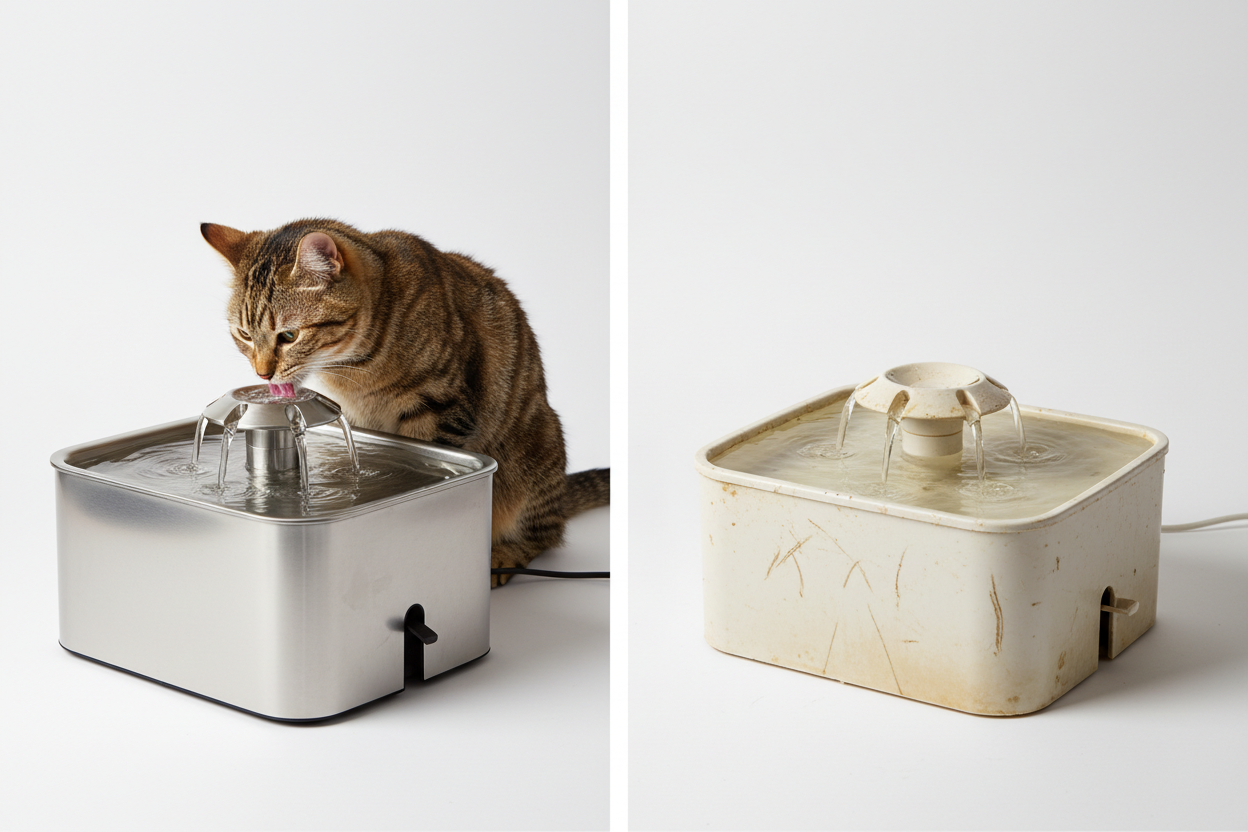
Why Your Cat's Water Bowl Material Matters More Than You Think
As a caring cat parent, you want the best for your feline friend. But did you know that the material of your cat's water fountain can significantly impact their health? In this comprehensive guide, we'll explore the critical differences between stainless steel and plastic cat water fountains, and why making the right choice could prevent common health issues like cat acne and bacterial infections.
The Hidden Dangers of Plastic Cat Water Fountains
1. Bacterial Growth & Biofilm Formation
Plastic surfaces are porous at a microscopic level, creating the perfect breeding ground for bacteria. Studies show that plastic bowls can harbor harmful bacteria like E. coli and Salmonella even after washing. The scratches that develop over time create even more crevices where bacteria thrive, forming a slimy biofilm that's nearly impossible to remove completely.
2. BPA and Chemical Leaching
Many plastic fountains contain BPA (Bisphenol A) and other chemicals that can leach into your cat's drinking water, especially when exposed to sunlight or warm temperatures. These endocrine disruptors have been linked to various health concerns in pets, including hormonal imbalances and potential long-term health risks.
3. Cat Acne & Feline Black Chin
One of the most common issues caused by plastic bowls is feline acne, also known as "black chin." The porous nature of plastic traps oils, bacteria, and food residue that can clog your cat's pores around the chin and mouth area. This leads to blackheads, inflammation, and in severe cases, painful infections that require veterinary treatment.
4. Durability Issues
Plastic fountains typically need replacement every 6-12 months due to scratching, discoloration, and degradation. The constant wear creates more surface area for bacteria and makes thorough cleaning impossible.
The Stainless Steel Advantage: Why Veterinarians Recommend It
1. Superior Hygiene & Antibacterial Properties
Stainless steel is non-porous, meaning bacteria cannot penetrate the surface. It's naturally resistant to bacterial growth and doesn't develop the biofilm issues common with plastic. This is why stainless steel is the material of choice in medical facilities and professional kitchens worldwide.
2. Prevents Cat Acne & Black Chin
The smooth, non-porous surface of stainless steel doesn't trap oils or bacteria that cause feline acne. Veterinarians consistently recommend stainless steel bowls for cats prone to chin acne, and many pet parents report complete resolution of black chin issues within weeks of switching.
Real results: Cats with chronic black chin often see improvement in 2-4 weeks after switching to stainless steel fountains, as the material doesn't irritate sensitive skin or trap acne-causing bacteria.
3. Chemical-Free & Safe
Food-grade stainless steel (304 or 316 grade) contains no BPA, phthalates, or harmful chemicals. It won't leach anything into your cat's water, ensuring pure, safe hydration every time. This is especially important for cats with sensitivities or compromised immune systems.
4. Easy to Clean & Maintain
Stainless steel is dishwasher-safe and can withstand high-temperature sanitization. Unlike plastic, it won't scratch easily, maintaining its smooth surface for years. A simple wash with soap and water or a run through the dishwasher keeps it hygienically clean.
5. Long-Term Value & Sustainability
While stainless steel fountains have a higher upfront cost, they last 5-10+ years with proper care. This means fewer replacements, less plastic waste, and better long-term value. You'll save money over time while making an environmentally conscious choice.
6. Taste & Odor Neutral
Plastic can absorb odors and impart a taste to water, which may discourage some cats from drinking. Stainless steel remains completely neutral, ensuring fresh-tasting water that encourages proper hydration.
Side-by-Side Comparison
| Feature | Stainless Steel | Plastic |
|---|---|---|
| Bacterial Resistance | ✓ Excellent - Non-porous surface | ✗ Poor - Harbors bacteria in scratches |
| Cat Acne Prevention | ✓ Prevents black chin & acne | ✗ Common cause of feline acne |
| Chemical Safety | ✓ No BPA or toxins | ✗ May contain BPA & leach chemicals |
| Durability | ✓ 5-10+ years | ✗ 6-12 months |
| Dishwasher Safe | ✓ Yes, high-temp safe | △ Limited - may warp |
| Odor Resistance | ✓ Doesn't absorb odors | ✗ Absorbs smells over time |
| Environmental Impact | ✓ Long-lasting, recyclable | ✗ Frequent replacement, plastic waste |
| Initial Cost | Higher | Lower |
| Long-term Value | ✓ Better ROI | ✗ Ongoing replacement costs |
What Veterinarians Say
Veterinary dermatologists consistently recommend stainless steel bowls for cats with skin sensitivities or recurrent chin acne. The American Association of Feline Practitioners notes that switching to stainless steel is often the first line of defense against feline acne, before resorting to medications or treatments.
Making the Switch: What to Expect
When transitioning your cat to a stainless steel fountain, most cats adapt immediately. Some cats may need a few days to adjust to the new appearance, but the benefits are worth it:
- Week 1-2: Your cat adjusts to the new fountain; you'll notice easier cleaning
- Week 2-4: If your cat had black chin, you may start seeing improvement
- Month 2+: Clearer skin, better hydration habits, and peace of mind knowing your cat is drinking from a safe, hygienic source
Our Recommendation: Premium Stainless Steel Cat Water Fountain
If you're ready to make the switch to a healthier option for your cat, consider our Premium Stainless Steel Cat Water Fountain. Designed with your cat's health in mind, it features:
- 100% food-grade 304 stainless steel construction
- Non-porous surface that prevents bacterial growth
- Dishwasher-safe components for effortless cleaning
- Sleek, modern design that complements any home décor
- Ultra-quiet pump to encourage shy cats to drink
- Large capacity for multi-cat households
Explore our stainless steel cat water fountain and give your feline friend the gift of clean, safe hydration.
Conclusion: Your Cat's Health is Worth It
While plastic fountains may seem like a budget-friendly option, the hidden costs—from health issues like cat acne to frequent replacements—make stainless steel the clear winner. By choosing a stainless steel cat water fountain, you're investing in your cat's long-term health, preventing common skin issues, and ensuring they always have access to clean, bacteria-free water.
Your cat deserves the best. Make the switch to stainless steel today and see the difference it makes in their health and happiness.
Have you noticed improvements in your cat's skin health after switching to stainless steel? Share your experience in the comments below!
Share:
How Much Water Should Cats Drink Daily? Complete Hydration Guide 2026
Why Does My Cat Have a Black Chin? Causes, Treatment & Prevention Guide