

Is Your Cat Suffering from Black Chin? You're Not Alone
If you've noticed dark, crusty spots or blackheads on your cat's chin, you're likely dealing with feline acne—commonly known as "black chin" or "cat chin acne." This surprisingly common condition affects cats of all ages and breeds, and while it may seem minor, it can lead to discomfort, infection, and chronic skin issues if left untreated.
The good news? Black chin is preventable and treatable. In this comprehensive guide, we'll explore what causes cat black chin, how to treat it effectively, and most importantly—how to prevent it from coming back.
What is Cat Black Chin (Feline Acne)?
Feline acne, or black chin, is a skin condition that appears as small black dots, similar to blackheads in humans, on your cat's chin and sometimes around the lips. In mild cases, you'll notice:
- Small black specks that look like dirt or pepper
- Slightly greasy or waxy texture on the chin
- No visible discomfort to your cat
In moderate to severe cases, symptoms escalate to:
- Swollen, red, or inflamed chin area
- Crusty scabs or lesions
- Hair loss around the affected area
- Visible discomfort—your cat may scratch or rub their chin excessively
- Secondary bacterial infections with pus or bleeding
What Causes Black Chin in Cats?
Understanding the root causes is essential for effective treatment and prevention. Here are the primary culprits:
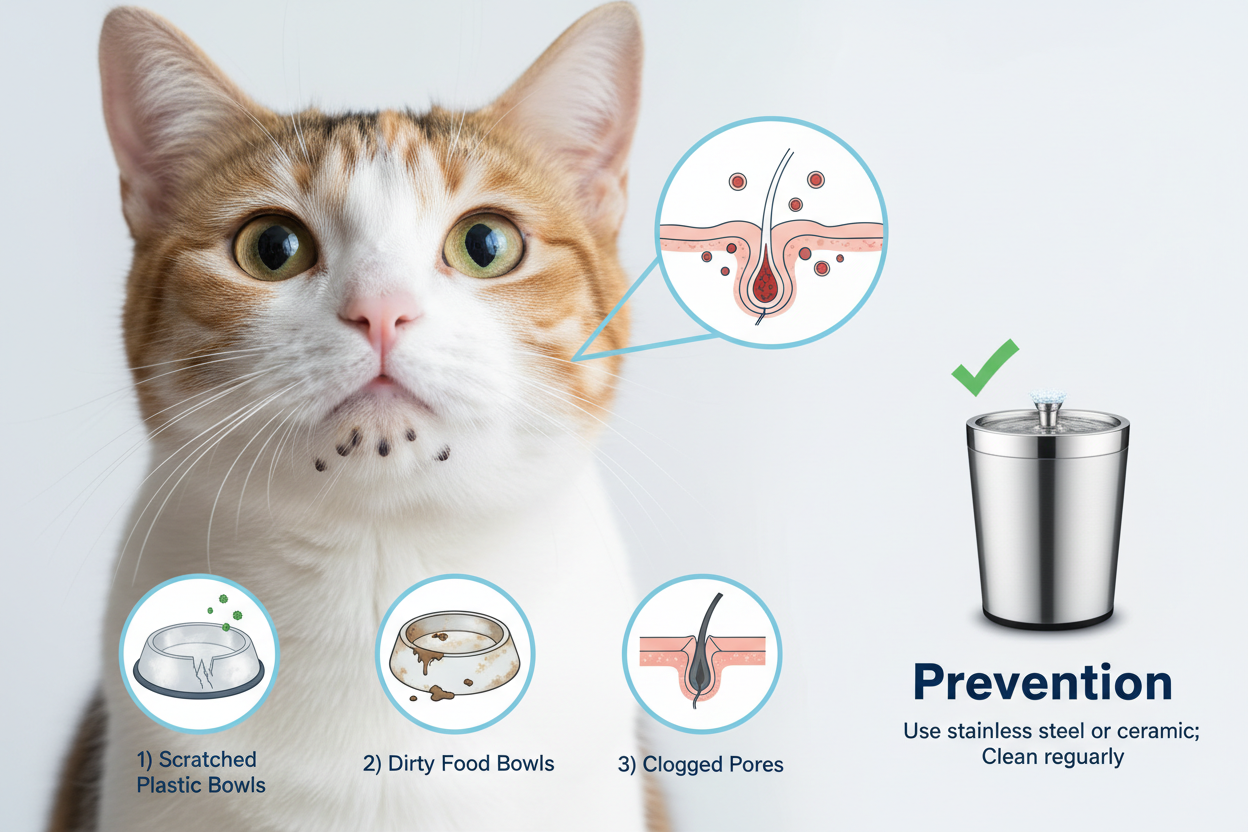
1. Plastic Food and Water Bowls (The #1 Cause)
This is the most common and preventable cause of feline acne. Plastic bowls are porous and develop microscopic scratches over time, creating the perfect environment for bacteria to thrive. When your cat eats or drinks, their chin comes into contact with these bacteria-laden surfaces, leading to clogged pores and acne.
Research shows that plastic bowls harbor significantly more bacteria than stainless steel or ceramic alternatives, even after washing. The oils and food residue trapped in scratches are nearly impossible to remove completely.
2. Poor Hygiene and Infrequent Bowl Cleaning
Even with non-plastic bowls, irregular cleaning allows bacteria, yeast, and food debris to accumulate. Cats who eat wet food are particularly susceptible, as the residue sticks to their chin and creates a breeding ground for acne-causing bacteria.
3. Overactive Sebaceous Glands
Some cats naturally produce more sebum (skin oil) than others, particularly around the chin area. This excess oil can clog hair follicles, leading to blackheads and inflammation—similar to human acne.
4. Stress and Hormonal Changes
Stress, anxiety, or hormonal fluctuations can trigger increased oil production and weaken your cat's immune response, making them more susceptible to skin conditions like acne.
5. Allergies and Sensitivities
Food allergies or contact allergies to bowl materials, cleaning products, or even certain foods can manifest as chin acne in sensitive cats.
6. Compromised Immune System
Cats with weakened immune systems—due to age, illness, or underlying health conditions—are more prone to developing and struggling to clear feline acne.
How to Treat Cat Black Chin: Step-by-Step
For Mild Cases (Home Treatment)
Step 1: Switch to Stainless Steel or Ceramic Bowls Immediately
Replace all plastic bowls with stainless steel or ceramic alternatives. This single change resolves black chin in many cats within 2-4 weeks. Stainless steel water fountains are particularly effective as they're non-porous, antibacterial, and easy to keep hygienically clean.
Step 2: Clean Your Cat's Chin Daily
Use a soft, damp cloth or pet-safe wipes to gently clean your cat's chin after meals. This removes food residue, excess oils, and bacteria before they can clog pores.
Step 3: Wash Bowls Daily
Clean food and water bowls with hot, soapy water every day. Stainless steel bowls can be safely run through the dishwasher for thorough sanitization.
Step 4: Apply Warm Compress
For visible blackheads, apply a warm, damp cloth to the chin for 2-3 minutes to soften the skin and help open pores. Never squeeze or pick at the blackheads, as this can cause infection.
For Moderate to Severe Cases (Veterinary Treatment)
If your cat's chin is swollen, inflamed, or showing signs of infection, consult your veterinarian. Treatment may include:
- Medicated cleansers: Chlorhexidine or benzoyl peroxide wipes specifically formulated for pets
- Topical antibiotics: For secondary bacterial infections
- Oral antibiotics: In severe or persistent cases
- Anti-inflammatory medications: To reduce swelling and discomfort
- Dietary changes: If food allergies are suspected
Important: Never use human acne products on your cat. Ingredients like salicylic acid and benzoyl peroxide in human formulations can be toxic to cats in the wrong concentrations.
How to Prevent Cat Black Chin from Returning
Prevention is far easier than treatment. Follow these proven strategies to keep your cat's chin clear and healthy:
1. Use Only Stainless Steel or Ceramic Bowls
This is the single most effective prevention method. Stainless steel is the gold standard recommended by veterinarians because it:
- Has a non-porous surface that doesn't harbor bacteria
- Doesn't scratch or degrade over time
- Is dishwasher-safe for easy, thorough cleaning
- Contains no chemicals that can leach into food or water
- Prevents contact allergies associated with plastic
Consider upgrading to a premium stainless steel cat water fountain that encourages hydration while maintaining superior hygiene. The flowing water stays fresher, and the stainless steel construction prevents the bacterial buildup that causes black chin.
2. Establish a Daily Cleaning Routine
- Wash food and water bowls daily with hot, soapy water
- Wipe your cat's chin after meals, especially if they eat wet food
- Deep-clean fountains and bowls weekly according to manufacturer instructions
3. Choose Shallow, Wide Bowls
Cats prefer bowls that don't touch their whiskers. Shallow, wide bowls also mean less chin contact with surfaces, reducing the risk of acne.
4. Maintain a Stress-Free Environment
Minimize stress through consistent routines, adequate playtime, and a calm home environment. Stress reduction supports overall skin health and immune function.
5. Feed High-Quality, Balanced Diet
Quality nutrition supports healthy skin and immune function. If you suspect food allergies, work with your vet to identify and eliminate trigger ingredients.
6. Regular Grooming and Monitoring
Check your cat's chin weekly for early signs of blackheads. Catching acne early makes treatment much simpler and prevents progression to painful infections.
When to See a Veterinarian
Consult your vet if you notice:
- Swelling, redness, or inflammation that doesn't improve within a week
- Open sores, bleeding, or pus
- Hair loss around the chin area
- Your cat appears uncomfortable or is excessively scratching
- Black chin that returns repeatedly despite preventive measures
Chronic or severe feline acne may indicate underlying health issues that require professional diagnosis and treatment.
Real Results: What Cat Parents Are Saying
Thousands of cat parents have successfully eliminated black chin simply by switching from plastic to stainless steel bowls. Common timelines include:
- Week 1-2: Reduction in new blackhead formation
- Week 2-4: Existing blackheads begin to clear
- Week 4-6: Complete resolution in most mild to moderate cases
Many report that their cats also drink more water after switching to a stainless steel fountain, enjoying the fresh, flowing water and cleaner taste.
The Bottom Line: Black Chin is Preventable
Cat black chin may be common, but it doesn't have to be a recurring problem for your feline friend. By understanding the causes—especially the role of plastic bowls—and taking simple preventive steps, you can keep your cat's chin clear, healthy, and comfortable.
The most important action you can take today: Replace plastic bowls with stainless steel alternatives. This single change prevents the bacterial buildup that causes feline acne and supports your cat's overall health and hygiene.
Ready to make the switch? Explore our premium stainless steel cat water fountain—designed to keep your cat hydrated, healthy, and free from black chin.
Has your cat struggled with black chin? What solutions worked for you? Share your experience in the comments below to help other cat parents!
Share:
How Much Water Should Cats Drink Daily? Complete Hydration Guide 2026
Stainless Steel vs Plastic Cat Water Fountains: Complete Safety & Health Guide 2026